Morning came and it was our turn to go through the Big Chute. It didn’t open until 9 AM, so we had a leisurely morning waiting. At about 8:30 AM, it started to rain. It wasn’t a hard rain, but just enough to make it worth putting on the rain gear. At almost exactly 9 AM, we saw the big carriage start moving toward the water and heard the bells as the gates closed the road. Here we go!
We were fourth in line, but the operators sometimes take boats out of order depending on the boats waiting. That way they can put some boats together to make it as efficient as possible. During the morning, a local 32 foot Carver had moved up to the blue line on the starboard side of the lock. When the called for the first boats, they asked the Carver and the first of the Looper boats in the line of six to go together. The Carver went first and the Kadey-Krogen was on the back end. All of us watched nervously and thought of our own boats in those slings.


By this time, a friendly green-shirted lock operator came over to look at the boats and talk to us. He needed to check the boat behind us to verify dimensions. That boat was from Quebec and wasn’t a Looper. The operator told us that they would probably take us all one at a time from then on because of our sizes. Over the loud speakers, another operator told us to all move forward on the blue line as boats left to make room for other boats waiting. This began the process of all of us helping each other by grabbing lines and walking boats forward. Thankfully, we only had to do this a couple of times before it was our turn!
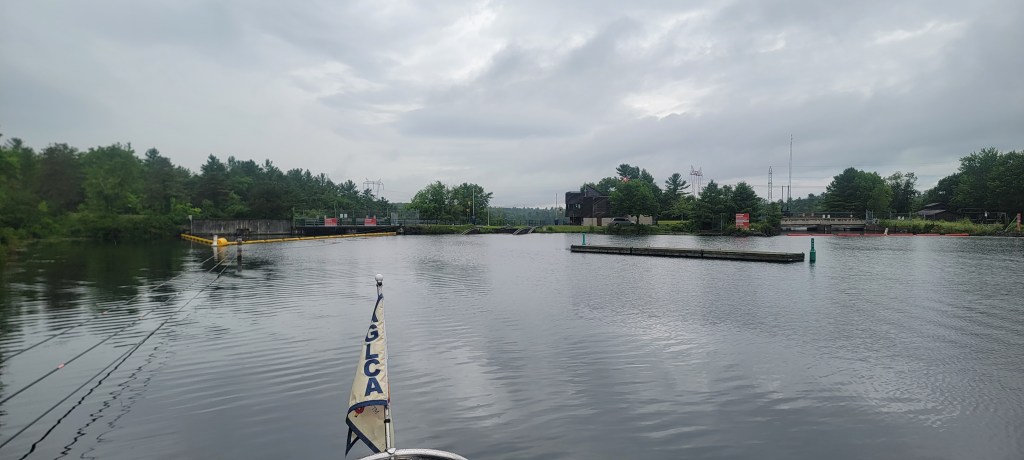
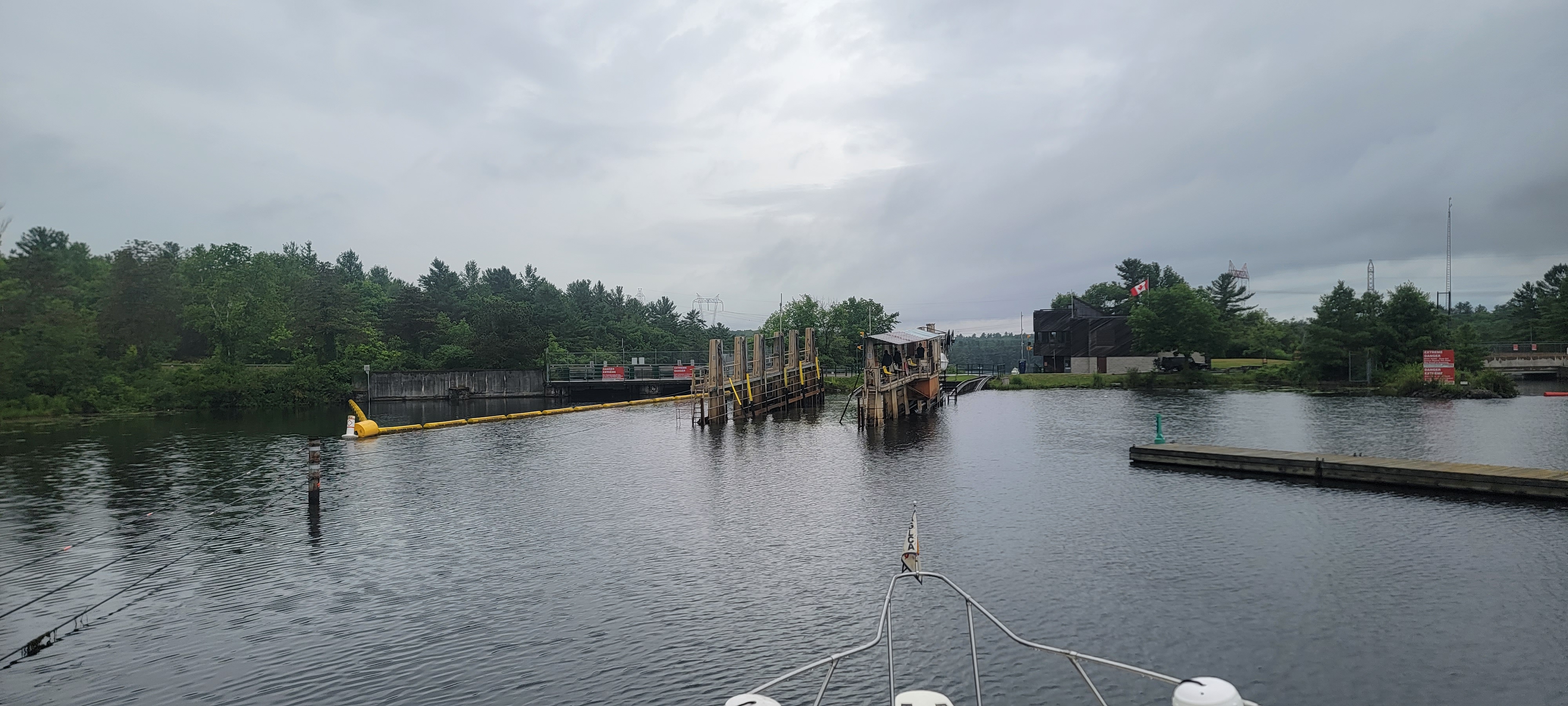
When they called for us, we slowly pulled off the blue line. There wasn’t much wind, but we did know that there was a current that pushed us to port right before getting to the carriage. We had marked our rails with where the keel ended to help the operators place the slings. When we got into the carriage, the operator had us stop way before where our mark was. Wha?
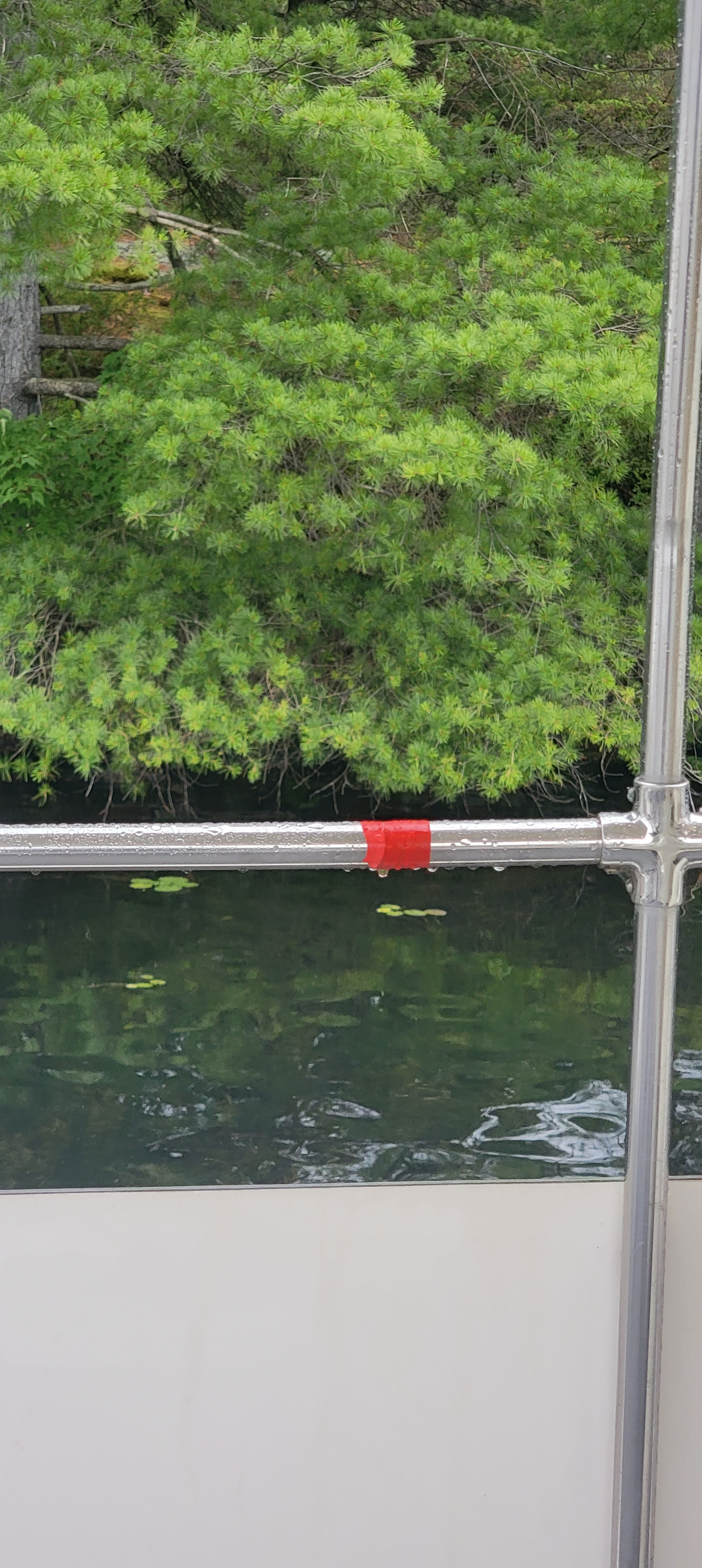
Trusting, but verifying, that they knew what they were doing, I stuck my head our and said, “are you sure? We seem too far back. The seasoned operator proceeded to briefly explain to me that the end of our keel would sit on the bottom wood with our shafts and props hanging off the back. The slings weren’t taking much of the weight and were to keep us from tilting. Oooohhhhh…. I nodded approvingly as if I had any say in the matter.
Once were were in, I shut off the engines and ran downstairs to shut off all of the seacocks for the raw water intakes. We had spoken to our fellow Loopers the night before and this was the recommended action to prevent air from creating a vacuum lock in the cooling systems and overheating an engine. The key was to just make sure that we opened them again before turning on the engines.
That complete, Wendy and I stood on our boat with video running as we were lifted out of the water, moved over the hill, and moved back down the other side of the hill. The whole process took less than 10 minutes. On the way down, there was a loud clank and a shudder. Thankfully, I remembered that happening as we were watching the train operate the day before and knew it was normal. We learned later that that was the cables reversing direction to manage the weight.


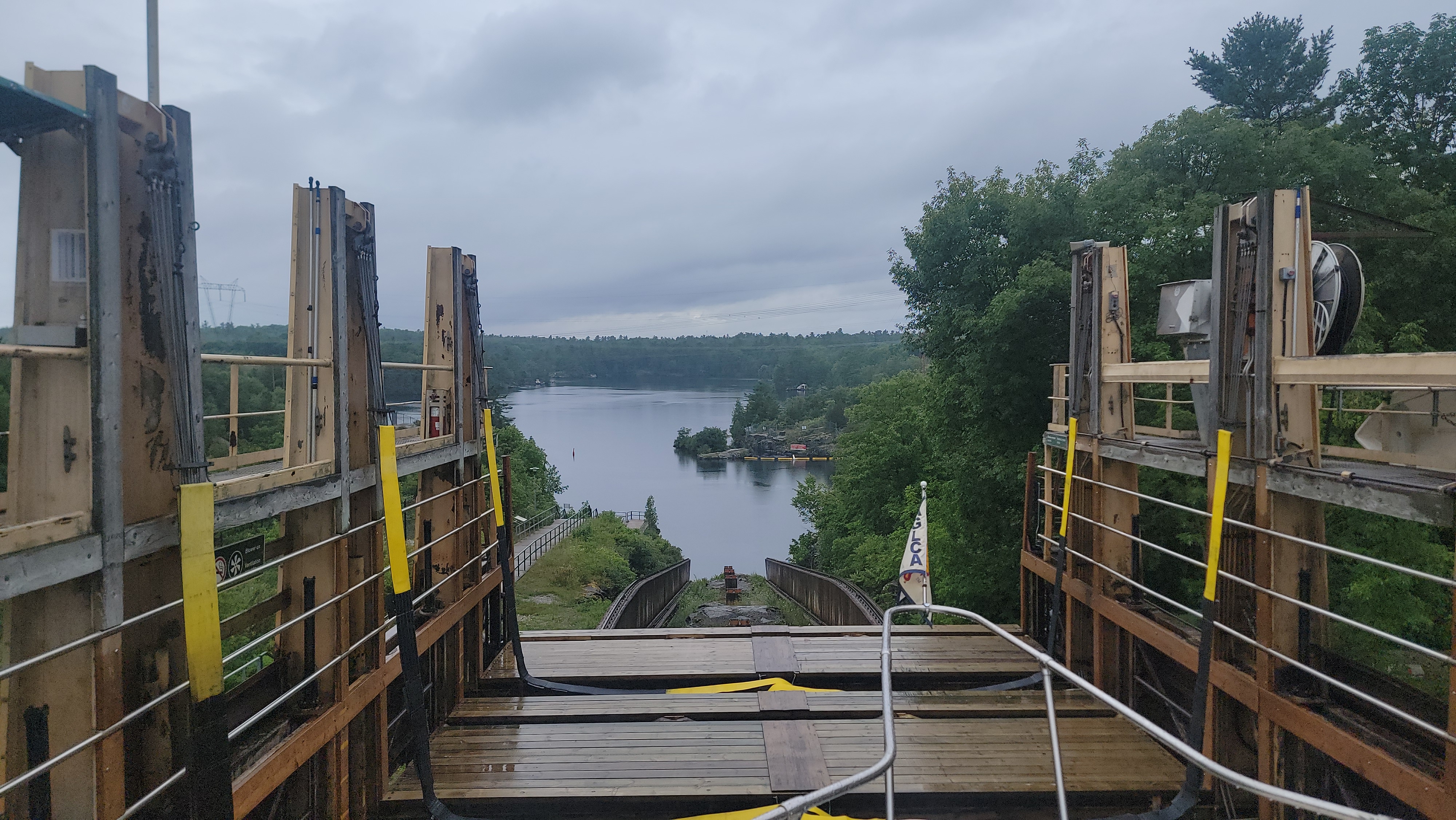
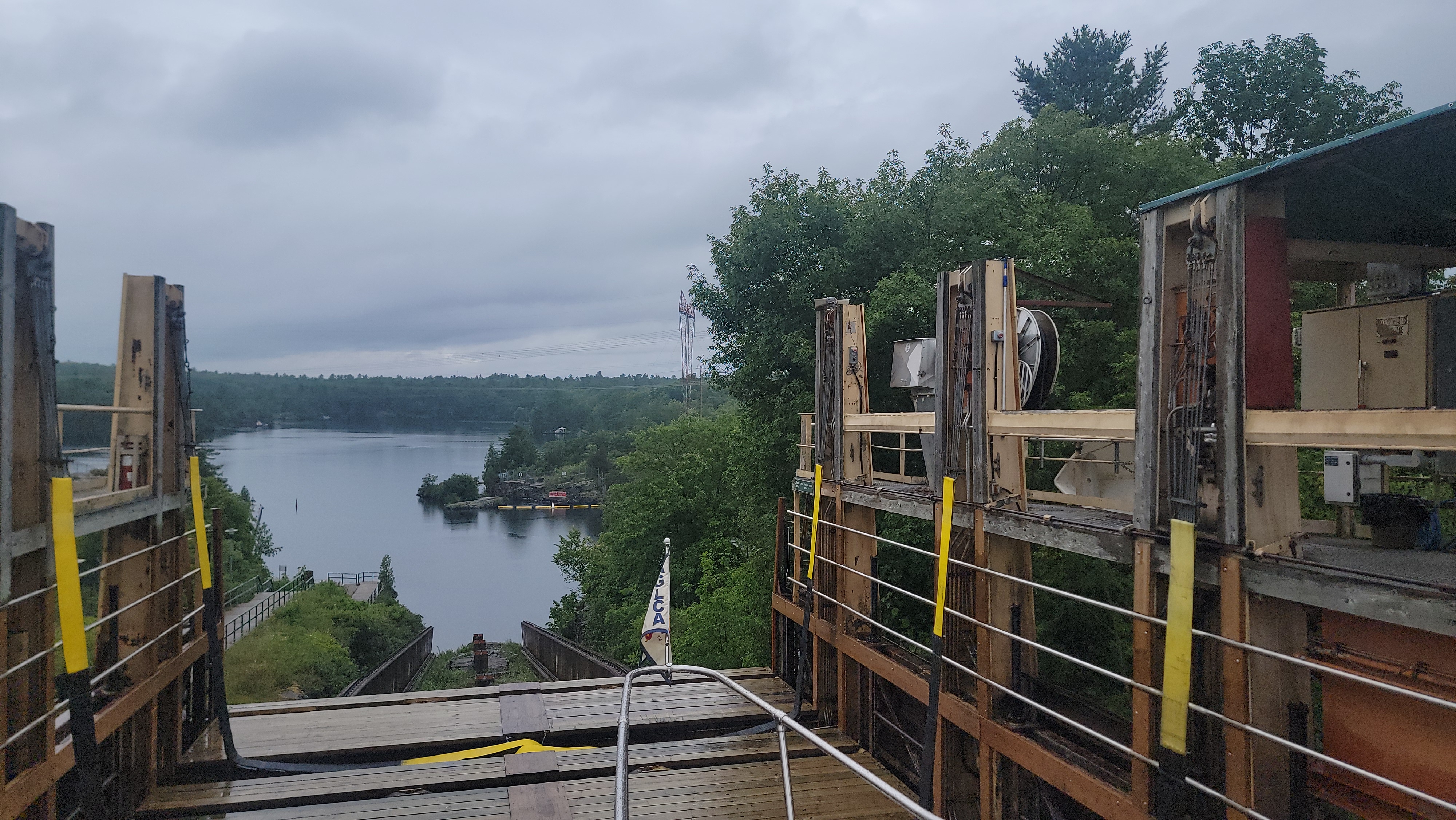

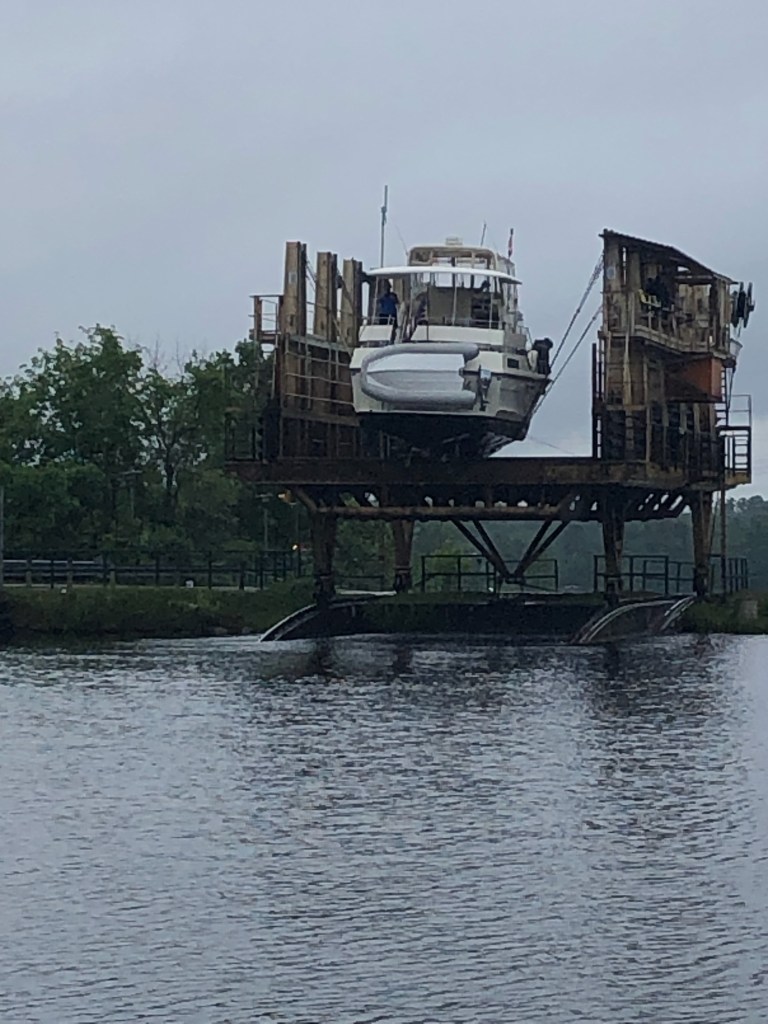
At the bottom of the hill we settled into the water. I reopened the seacocks, fired up the engines, and we eased out into open water. Easy enough.


From there we had a short 8.5 mile run through some beautiful cottage country to the next lock. Lock 45, Port Severn lock, was to be our 108th and final lock of our Loop. Perhaps savoring the moment, and because I needed to get some work done, we tied up at the top side of the lock at the grey dock for several hours. I worked as Wendy greeted fellow loopers going through the lock and took their pictures for them.
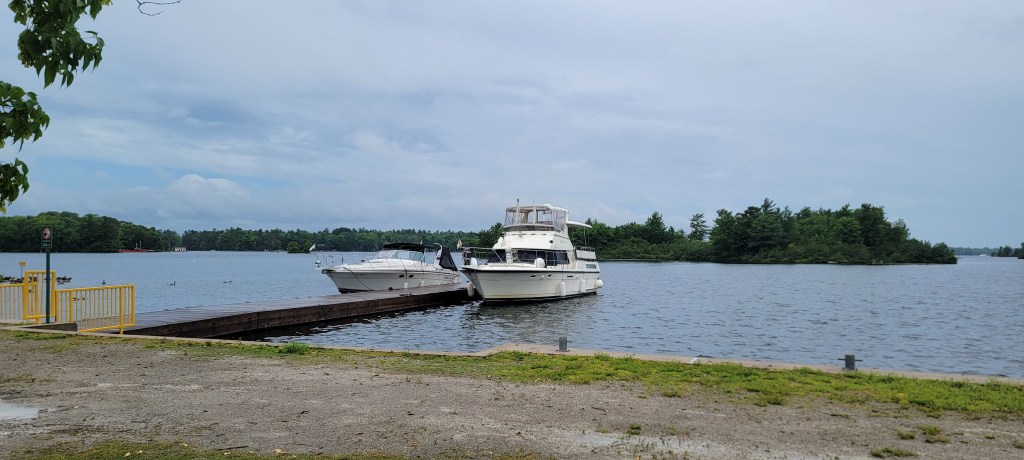
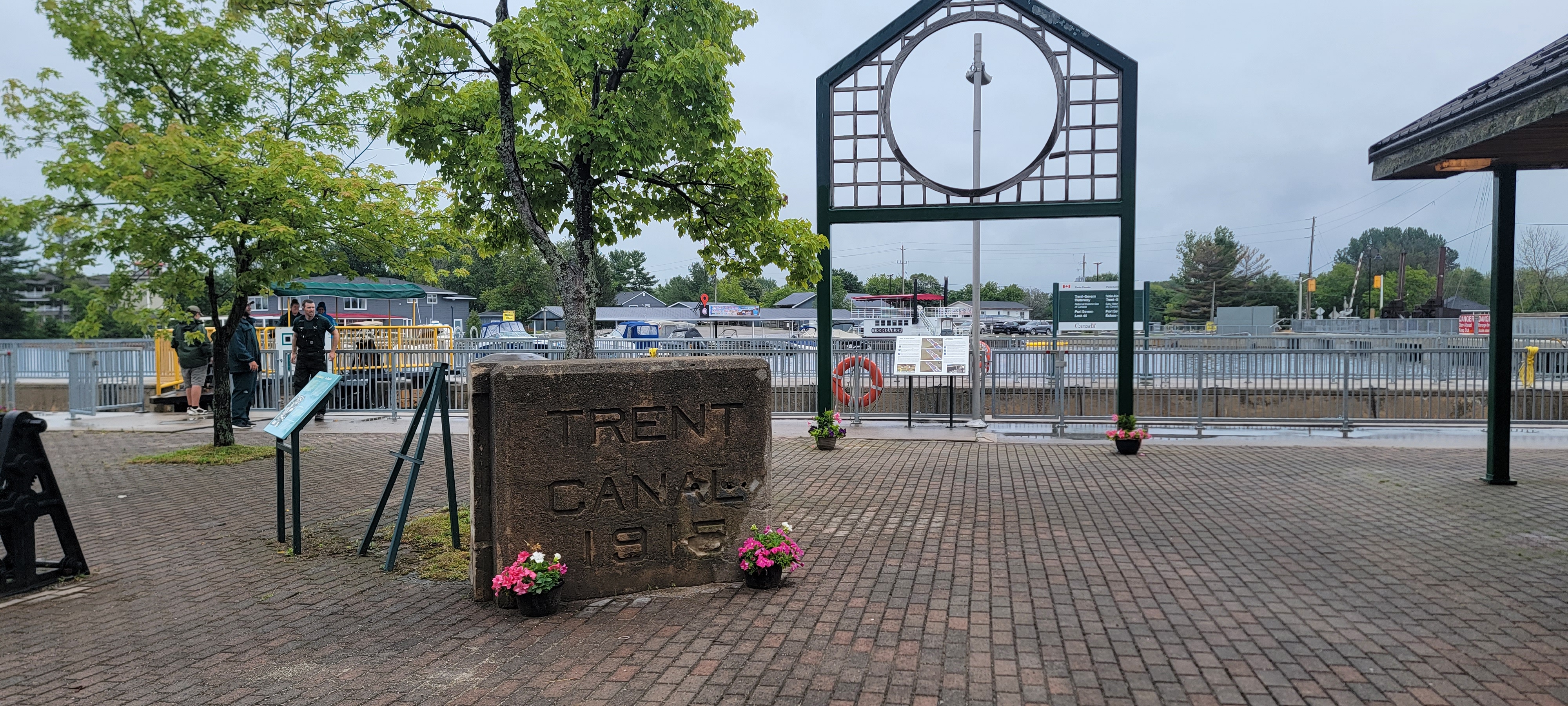
After work at the end of the day, we saw an opening and got in line. Right as we headed to the blue line, however, another boat came from the other way. We tied up first, but then yelled to the other boat to offer to let them go first. It felt like we cut in line. They were appreciative, but when the time came to lock through, the Lock Master squeezed us both in together anyway.
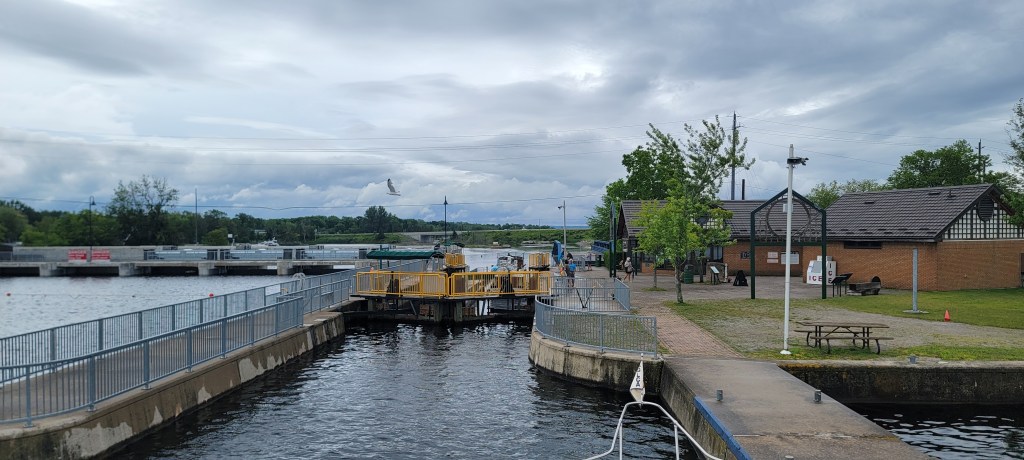
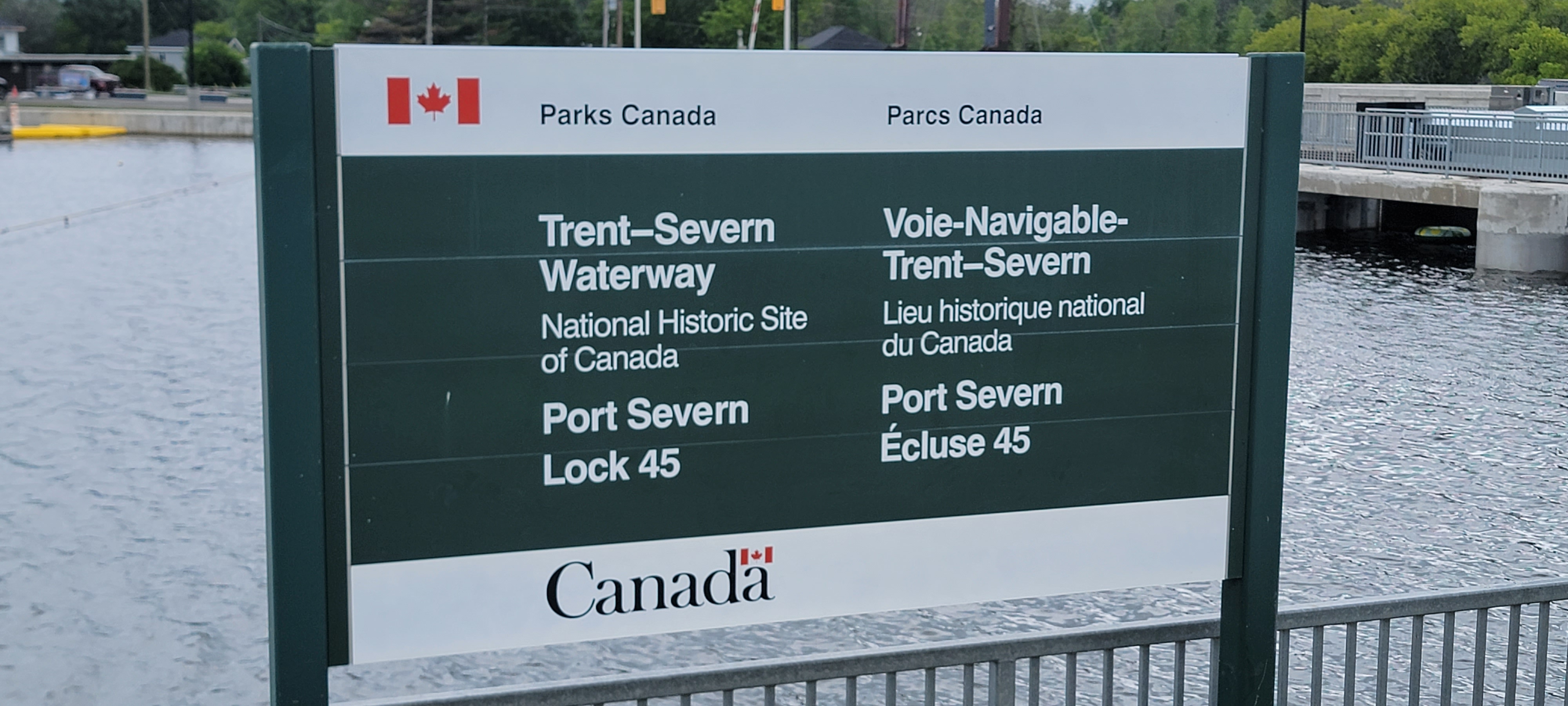
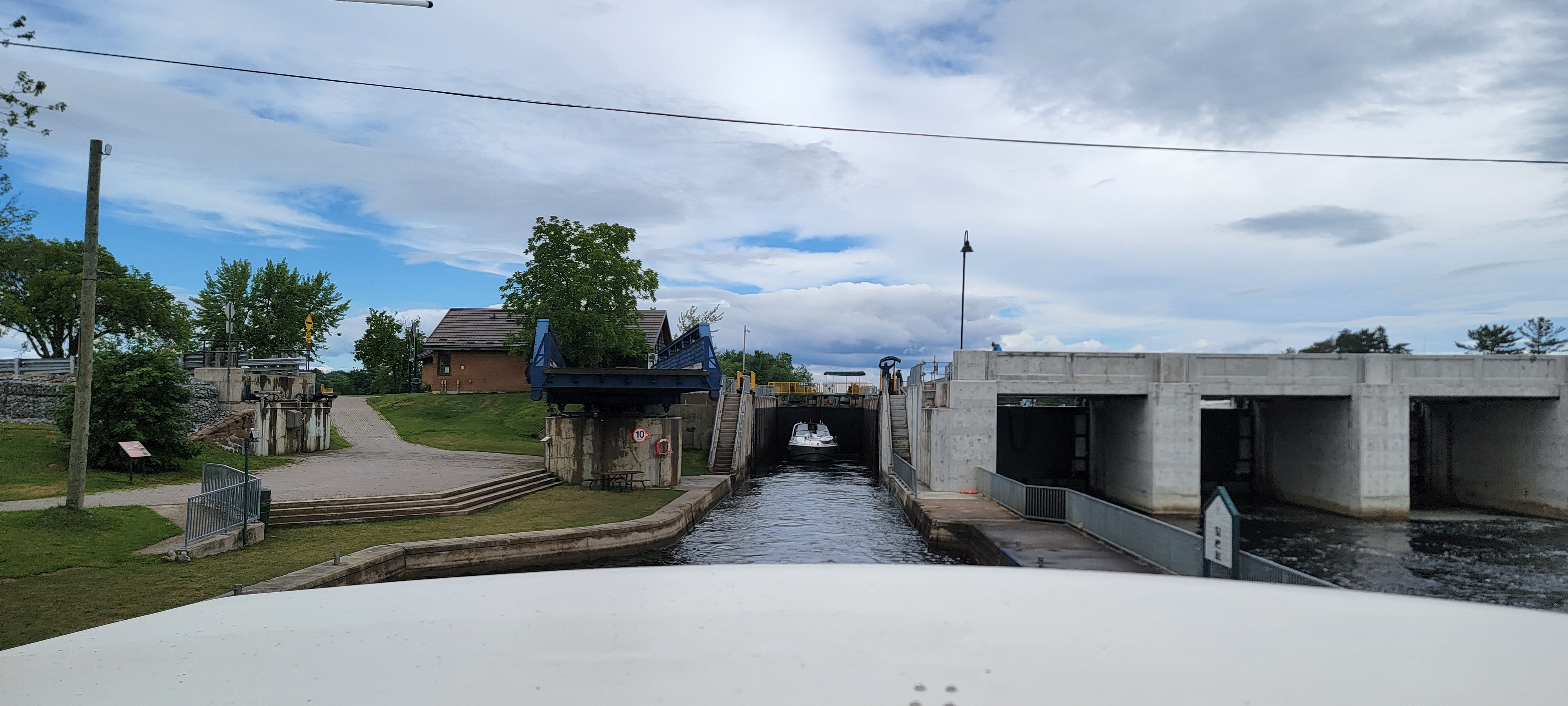
Locking through was easy. When we cleared the lock, we followed the narrow channel out to wider water and made our way the 11.5 miles to Midland. It felt good to have wide and deep water for the first time since Lake Simcoe.
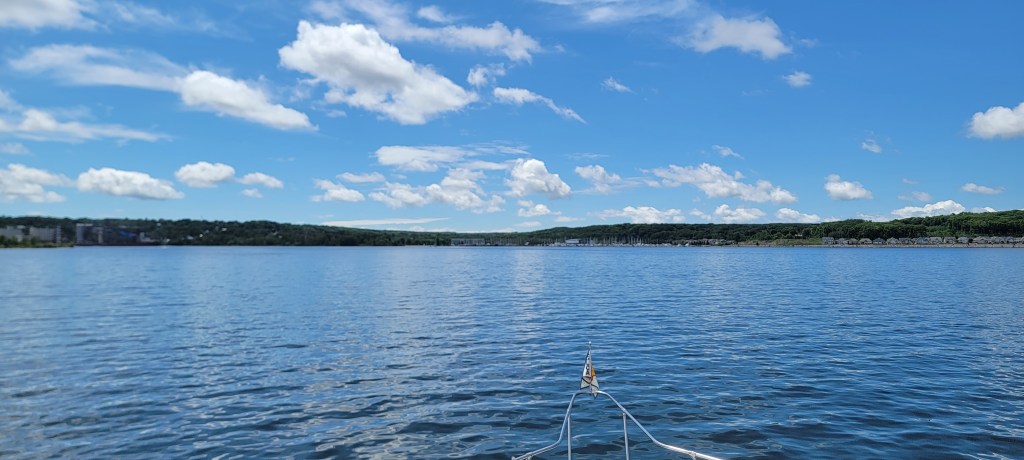
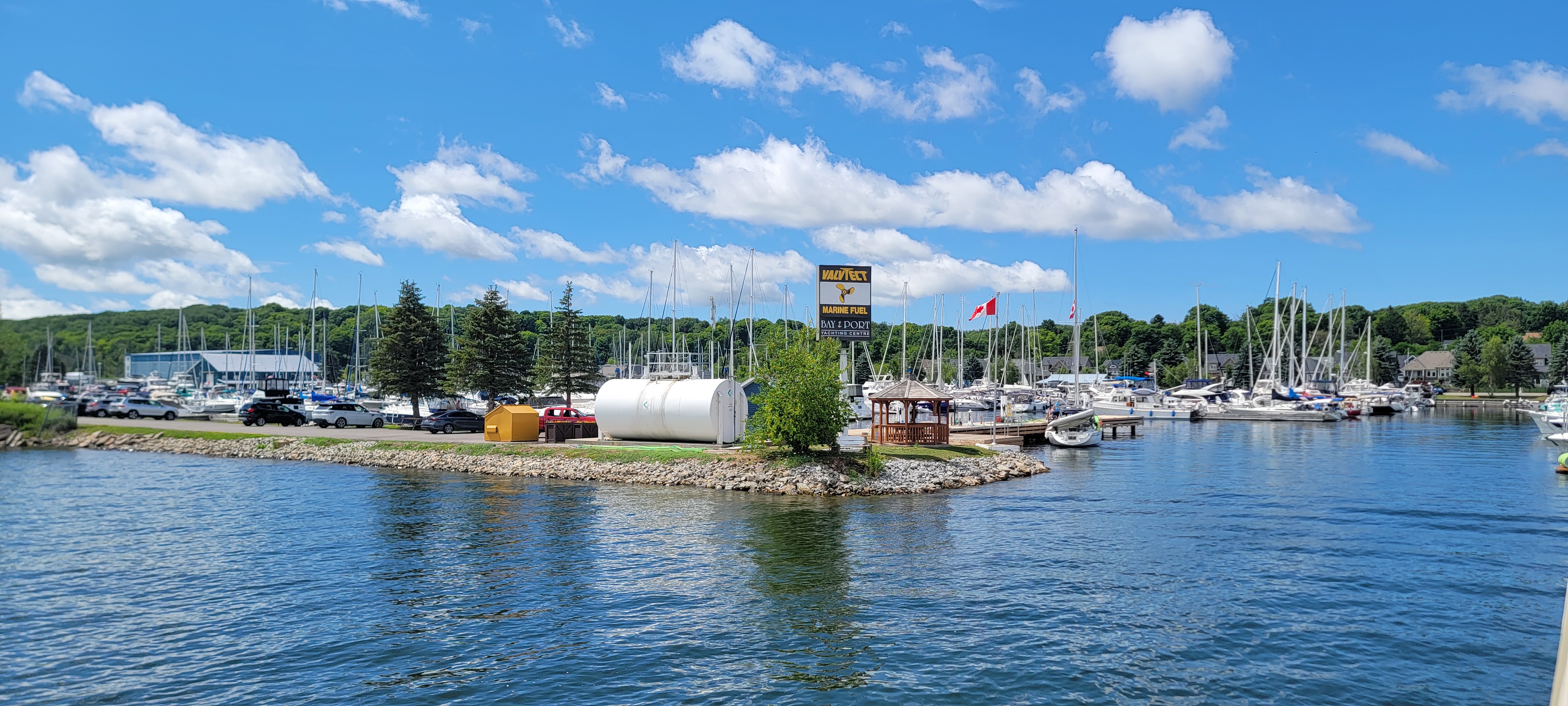
We had booked a slip at the Bay Port Yachting Center just outside of Midland proper. The town marina is usually preferred because of its easy access to downtown and stores, but due to a tall ship regatta the next weekend, there wasn’t room for us. Bay Port is a beautiful marina with excellent facilities. We stopped at the fuel dock at the entrance for fuel and a pump out before making our way into slip M1. It’s a great spot very near all of the marina facilities.

Our slip was also next to another Hatteras! We don’t see very many of them this far north. Over the next few days we had the opportunity to chat with our super friendly neighbors. Aspiring loopers, Bay Port is their home port and they had extremely helpful advice for how to get the most out of the Georgian Bay with our timeframe. We look forward to seeing them again when they start their loop.
 Bowlines Thrown